We earn a commission if you buy through our links, at no extra cost to you.
Best Pellet Grill for Camping: Group Trip Guide
How to pick a portable pellet grill for car camping: cooking area per person, hopper vs. trip length, legs vs. tabletop, 120V power and campfire rules.
At a glance
For group car camping, the Grilla Chimp 2.0 has the most cooking area of the three portables, at 460 sq in, with a 15 lb hopper and folding legs. The Traeger Tailgater is lighter at 62 lbs, and the Traeger Ranger is the smallest at 60 lbs. All three need a 120V outlet or power station.

A pellet grill at a campsite sounds odd until you try a long, low smoke while everyone fishes. The catch is that these grills were built for backyards. They need electricity, pellets kept dry, and a stable, level surface that is not near anything that burns. This guide is for people who camp from a car or truck, cook for a group, and want to know which of the portable pellet grills on our site suits that trip. It is not for backpackers, and it is not about RV setups; for those, see our RV and tailgating guide.
We do not handle these grills. The figures below come from the makers’ own product pages and, for safety, from fire agencies, and we say so where we cite them.
Step 1: Size the Grill to the Group
Cooking area is the number that decides how long dinner takes. The three portables we cover list:
| Grill | Total cooking area | Capacity, per the maker | Weight |
|---|---|---|---|
| Grilla Chimp 2.0 | 460 sq in | 340 sq in main grate plus 120 sq in upper rack | 90 lbs |
| Traeger Tailgater | 300 sq in | 2 chickens, or 3 rib racks, or 12 burgers | 62 lbs |
| Traeger Ranger | 176 sq in | 1 rib rack, or 6 burgers, or 10 hot dogs | 60 lbs |
A rule of thumb that works for camp meals: if the grill holds your group’s burgers in one batch, you can keep the rest of the evening simple. The Ranger is fine for two to three people. The Tailgater is better for four to six. The Chimp 2.0 gives a larger group more room and the upper rack for sides. That is our editorial guideline and not a maker rating.
Step 2: Match the Hopper to the Trip
Hopper size sets how long you can walk away. Grilla lists a 15 lb hopper on the Chimp 2.0 and says pellets burn at about a pound an hour at an average 250°F, so a full hopper cooks for around 10 to 15 hours. Traeger lists an 8 lb hopper on the Ranger and Tailgater but does not publish a burn rate in the pages we read. Apply Grilla’s rule of thumb to estimate, and treat it as a loose guide at best.
For a weekend, the simple plan is to count your long cooks, multiply by hours, and carry more than that. Hot cooks and cold weather use more pellets. Store them in a sealed bin, because damp pellets swell and can jam an auger, which is one reason to keep the bag off the ground and out of the rain.
Step 3: Legs, Wheels or Tabletop
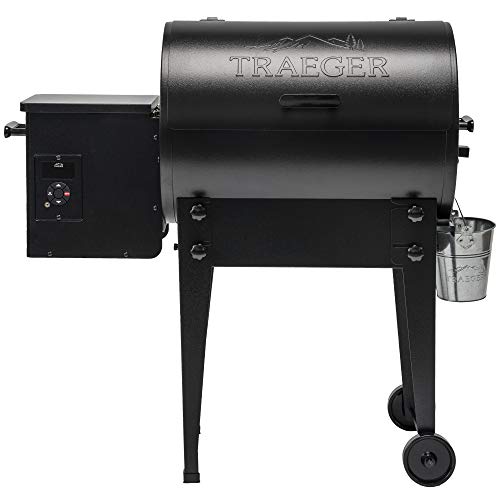
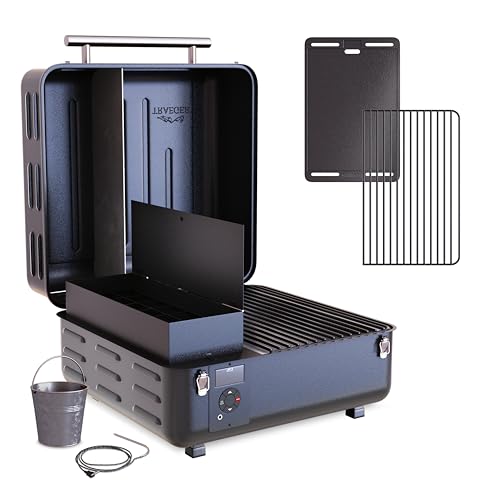
Campsites are rarely flat. The Chimp 2.0 and the Tailgater both have folding legs, so they stand at a usable height on their own. Grilla lists snap-lock folding legs, a grease can holder and a cord holder, and says the Chimp can roll out to the tailgate and stand on its own. Traeger lists easy-fold legs on the Tailgater. The Ranger is a tabletop grill, so you need a sturdy picnic table or tailgate that can take its 60 lbs.
On uneven ground, a grill that stands on legs needs to be leveled and stable before you light it. A grill on a wobbly camp table is a risk. Use a noncombustible surface, and keep a three-foot kid and pet zone around it, as Seattle Fire Department advises.
Step 4: Plan the Power
Pellet grills are electric appliances. Here is the power each maker lists:
- Grilla Chimp 2.0: a standard household three-prong outlet, 120 volt 50/60 Hz. Grilla sells a bundle with its power station and lists a power station hanger on the grill.
- Traeger Tailgater and Ranger: 120V AC and 250 watts, with a 6 ft AC power cord that plugs into the nearest outlet.
Your sources at camp are a site hookup with a 120V outlet, a generator, or a portable power station. We cannot say whether a given generator or station will run a given grill, since that depends on its rated output, its surge capacity and the grill’s start-up draw. Compare the device’s label with the grill’s published wattage, ask the grill maker if the number is not listed, and follow both makers’ guidance. Grilla’s page does not list a wattage in the text we read, so check its manual.
Step 5: Fire Rules and Safe Placement
- Outdoors only. Never run a pellet grill inside a tent, camper or vehicle. Traeger’s owner’s manual for the Ironwood and Woodridge warns that burning wood pellets produces carbon monoxide and says never to use the grill in any enclosed area or under a combustible ceiling or overhang. Our own advice is to apply the same rule to every pellet grill at a campsite, including under an awning.
- Clearance. Keep the distance to combustibles listed in your grill’s owner’s manual. For reference, Traeger’s manual for the Ironwood and the Woodridge lists a minimum of 20 inches from the grill to nearby combustibles, including wooden railings, siding, trees and furniture.
- Distance from structures. Seattle Fire Department advises grilling outside on a noncombustible surface 10 feet from siding, deck rails and open doors or windows. The International Fire Code prohibits open-flame cooking devices within 10 feet of combustible construction, with exceptions.
- Campground and land-agency rules. Fire restrictions vary by site, season and agency. Check them before you go, and ask the host if a restriction on appliances is unclear.
Picking a Grill for Your Trip
Best for Group Trips: Grilla Chimp 2.0
The largest cooking area of the three portables, at 460 sq in, with a 15 lb hopper and folding legs. Fits a group that wants to smoke at camp.
The Chimp 2.0 is our lead pick because it has the cooking area and the fuel capacity for a group weekend. Grilla lists a 15 lb hopper, double-wall insulation, an Alpha Connect 2.0 Wi-Fi controller and two probes. The trade-off is weight: 90 lbs is a lot to lift in and out of a vehicle. Read the Grilla Chimp 2.0 profile for the full specification.
A Lighter Step-Up: Traeger Tailgater
A 300 sq in portable with easy-fold legs and an 8 lb hopper, lighter at 62 lbs. Fits a family of four at a campsite with power.
Traeger describes the Tailgater as compact and portable, good for balconies, tailgating or wherever you want its versatility. It lists 300 sq in, a smoke setting up to 450°F, a 250 watt draw and no WiFIRE. It is a sensible middle size if the Chimp’s weight is too much. See the Traeger Tailgater profile.
The Lightest Option: Traeger Ranger
A 60 lb tabletop grill with 176 sq in, a cast iron griddle and an 8 lb hopper. Fits a couple or a small group on a short trip.
The Ranger is the smallest and lightest, and it needs a sturdy table. Traeger includes a cast iron griddle, which also makes it useful for breakfast. Choose it if you camp as a couple and value packing space over capacity. Read the Traeger Ranger profile.
Quick Packing Checklist
- The grill, its power cord, and a power source sized to its published draw
- A sealed container of pellets, with extra
- A noncombustible surface or a fireproof mat under the grill, kept clear of the tent
- Grease can and cleaning tools
- A meat thermometer
- Printed fire rules for your campground
Which Should You Take?
If you cook for five or more and can lift 90 lbs, take the Chimp 2.0. If you cook for a family of four and want a lighter grill, take the Tailgater. If you travel as a couple, or space matters more than capacity, take the Ranger. If you want a full-size grill for the backyard instead, see our pellet grill ranking for 2026.
Sources
- Grilla Grills Chimp 2.0 Tailgater Wood Pellet Grill, official product page
- Traeger Tailgater, official product page
- Traeger Ranger, official product page
- Ironwood owner’s manual (TFB93RLG)
- Seattle Fire Department: Outdoor Grilling and Fire Safety
- International Code Council: Avoid burns and trauma this summer
Frequently asked questions
Can I use a pellet grill at a campsite without electricity?
Not on its own. Pellet grills run an auger, fan and igniter on electricity. Grilla lists a standard 120 volt household outlet for the Chimp 2.0, and Traeger lists 120V AC and 250 watts for the Ranger and Tailgater. At a campsite that means a hookup with a 120V outlet, a generator or a portable power station. Compare the device's output with the grill's draw and follow both makers' guidance.
How many pellets do I need for a weekend?
Grilla says its Chimp burns about a pound an hour at 250°F, and a 15 lb hopper lasts around 10 to 15 hours. Plan from that figure: six hours of smoking is about 6 lbs, plus extra for hot cooks and cold weather. Traeger does not publish a burn rate for its portables, so carry spare pellets in a sealed container.
Can I run a pellet grill inside my tent or camper?
No. Traeger's owner's manual for the Ironwood and Woodridge warns that burning wood pellets produces carbon monoxide and say never to use the grill in any enclosed area. Apply the same rule to a tent, camper or vehicle. This is also our own editorial advice.
Are pellet grills allowed in campgrounds?
It depends on the campground and the land agency. Some set seasonal fire restrictions or limit appliances to the fire ring or the site. Read the rules for your site and ask the campground host before you bring a grill.
Which is better for camping, folding legs or a tabletop grill?
Folding legs, as on the Grilla Chimp 2.0 and Traeger Tailgater, put the grill at standing height but need level ground. A tabletop grill like the Traeger Ranger needs a sturdy table or tailgate. Either way, place it on a noncombustible, stable surface, away from the tent and anything that can burn.
How much cooking area do I need for a group?
Traeger rates the Ranger's 176 sq in at one rib rack or six burgers, the Tailgater's 300 sq in at two chickens, three rib racks or 12 burgers, and Grilla lists 460 sq in on the Chimp 2.0. For four or more people, the larger grates mean fewer batches.